Stainless Steel vs Zinc-Coated Finishes: Which is right for the job?
When choosing fastenings, the finish is about more than just appearance. The right finish can significantly influence corrosion resistance, durability, maintenance requirements, appearance and ultimately the service life of a component.
Two of the most widely used options are stainless steel and zinc-coated finishes. Both provide protection against corrosion, but they achieve this in very different ways.
Understanding the qualities of each finish makes it easier to decide which is better suited to a particular environment and application.
Stainless Steel: Corrosion Resistance Built into the Material
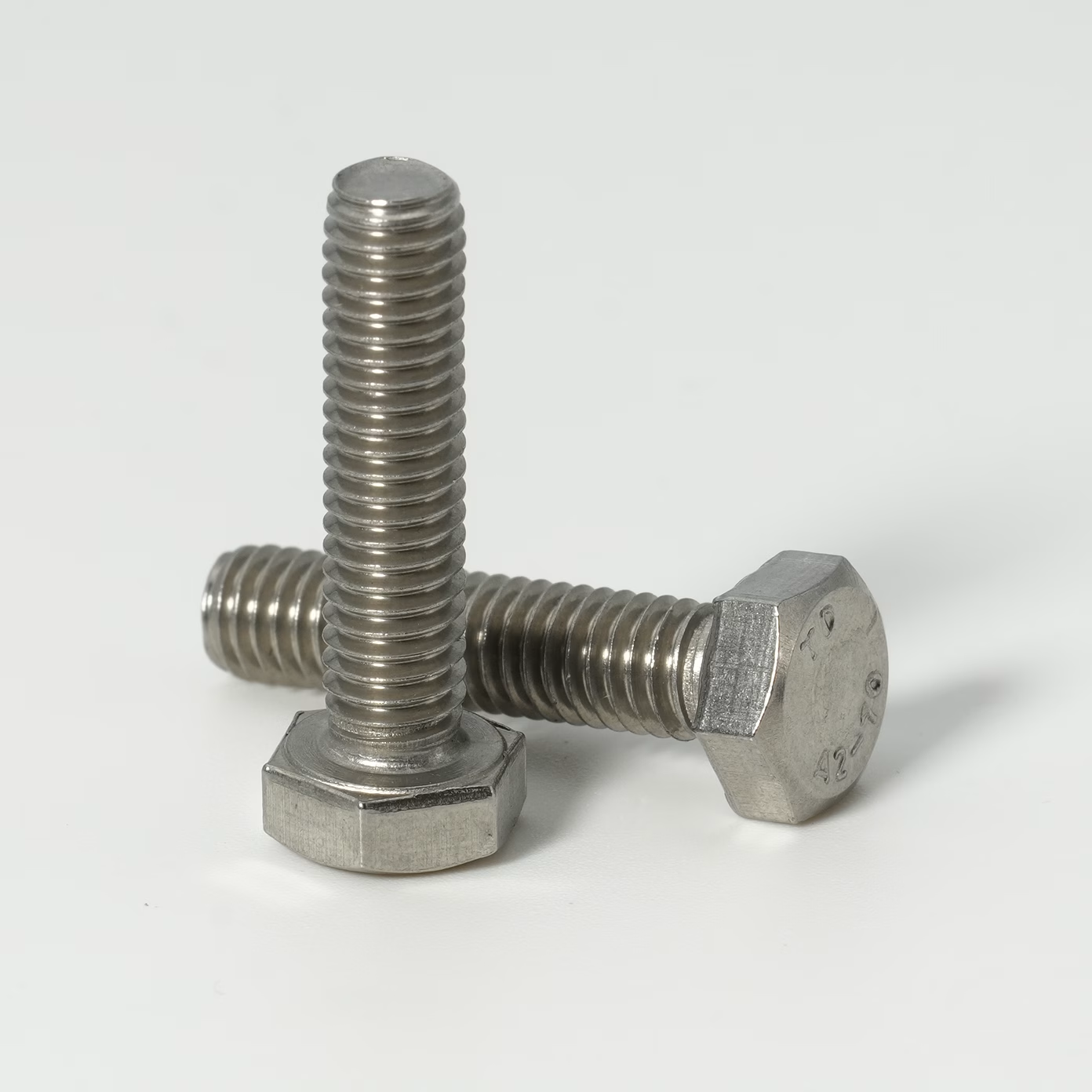
Stainless steel differs from a conventional steel fastening with a protective coating because its corrosion resistance comes primarily from the material itself.
Stainless steels such as 304 and 316 contain chromium. This allows a thin, protective oxide layer to form naturally on the surface. If the surface is damaged, this passive layer can reform in the presence of oxygen, helping the material maintain its corrosion resistance.
This is one of the major advantages of stainless steel: the protection isn’t simply a coating sitting on top of the steel.
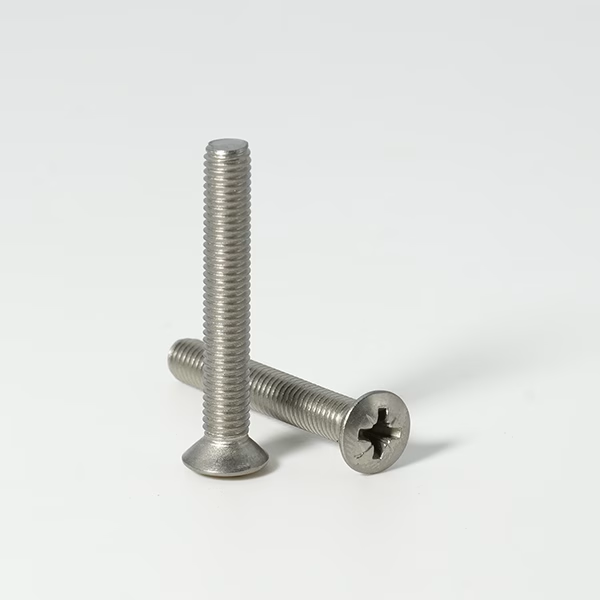
Key benefits of stainless steel
Zinc-Coated Finishes: Protection From the Outside In
Zinc-coated steel takes a different approach.
Instead of making the entire component corrosion-resistant, a layer of zinc is applied to the surface of the steel. The zinc provides a protective barrier and, importantly, can also provide sacrificial protection.
If the zinc coating is damaged and the underlying steel becomes exposed, the zinc can preferentially corrode and provide cathodic protection to the exposed steel.
This is a significant advantage of zinc compared with a simple barrier coating such as paint. American Galvanizers Association+1
However, not all zinc finishes offer the same level of protection.
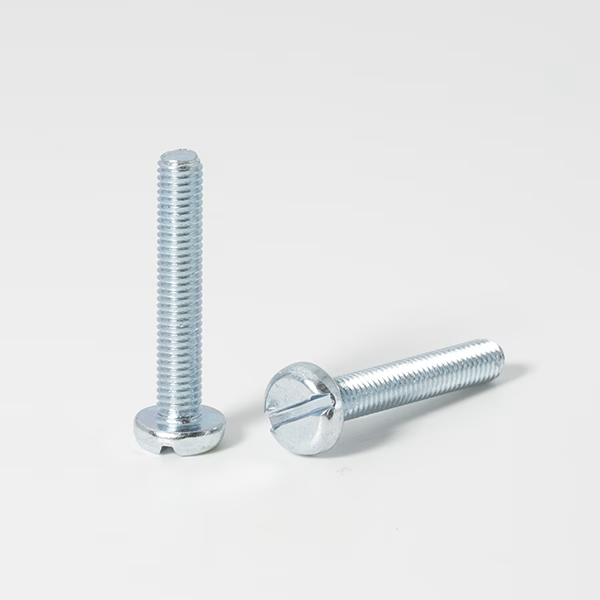
Zinc Plating
Electroplated zinc is a relatively thin coating that provides economical corrosion protection and a clean, uniform appearance. It is commonly used where the environment is relatively mild.
Because the coating is thin, its corrosion resistance is more limited than that of heavier galvanised coatings. The American Galvanizers Association notes that conventional zinc-plated coatings can be up to around 25 microns thick and are generally intended for interior or mildly corrosive environments. American Galvanizers Association
Hot-dip galvanising
Hot-dip galvanising provides a much thicker zinc coating and therefore substantially greater corrosion protection.
The steel component is immersed in molten zinc, creating a metallurgically bonded coating. The resulting zinc and zinc-iron alloy layers provide both a physical barrier and sacrificial protection. American Galvanizers Association+1
This makes hot-dip galvanised finishes particularly useful where components are exposed to demanding outdoor conditions and a long service life is required.
Comparing the Qualities of Each Finish
| Quality | Stainless Steel | Zinc-Coated Steel |
|---|---|---|
| Corrosion protection | Protection is inherent to the material | Protection comes from the zinc coating and sacrificial action |
| Resistance if surface is scratched | Generally retains corrosion-resistant properties | Zinc can continue to protect exposed steel sacrificially |
| Long-term appearance | Excellent, depending on grade and environment | Can weather and develop zinc corrosion products over time |
| Coating wear | No conventional protective coating to wear away | Protection depends partly on coating thickness and condition |
| Maintenance | Generally low | Depends on coating type and environment |
| Initial cost | Usually higher | Generally more economical |
| Aesthetic finish | Silver/grey, premium appearance | Clean, typically bright silver/grey appearance – varies with coating |
| Harsh environments | Appropriate stainless grade can perform extremely well | Heavy zinc coatings can provide excellent protection |
| Environmental exposure | Particularly useful where corrosion resistance is critical | Excellent where the coating specification matches the environment |
| Life-cycle value | Strong where longevity and low maintenance are priorities | Strong where economical corrosion protection is required |
When Is Stainless Steel the Better Choice?
Stainless steel becomes particularly attractive when long-term corrosion resistance and appearance are important considerations.
For example, it can be a strong choice where the component is:
- Permanently exposed to weather.
- Located in a coastal or marine environment, where the appropriate stainless grade is selected.
- Highly visible and appearance matters.
- In an environment where regular maintenance or replacement would be difficult.
- Required to remain clean and presentable over a long period.
- Exposed to conditions where a conventional coating may be vulnerable to damage.
The important point is that stainless steel is not simply one level of corrosion resistance. Grade selection matters. 304 and 316, for example, have different corrosion-resistance characteristics, and more specialised stainless grades are available for particularly demanding environments.
When Is a Zinc Finish the Better Choice?
Zinc-coated finishes can offer an excellent balance between corrosion protection and cost.
For many applications, a zinc finish provides all the protection required without the additional cost of stainless steel.
A lighter zinc-plated finish may be appropriate where:
- The component is primarily used indoors.
- The environment is relatively dry.
- Moderate corrosion protection is sufficient.
- A cost-effective finish is important.
- A smooth, uniform appearance is required.
Where the environment is considerably more demanding, a heavier zinc coating such as hot-dip galvanising may be more appropriate.
Hot-dip galvanising provides substantially more coating thickness than conventional zinc plating, and the zinc coating is strongly bonded to the underlying steel. This makes it much better suited to demanding outdoor exposure.
Finish Thickness Matters
One of the most important things to remember when comparing zinc and stainless steel is that “zinc coated” doesn’t describe a single level of protection.
A thin electroplated zinc finish and a heavy hot-dip galvanised coating can look relatively similar, but their corrosion performance can be very different.
The thickness of a zinc coating has a direct relationship with its expected service life. Generally, the more zinc available to act as the protective layer, the longer the coating can provide protection before maintenance or replacement becomes necessary. American Galvanizers Association+1
Therefore, specifying simply “zinc coated” may not provide enough information for a demanding application. The coating process, thickness and any additional passivation should be considered.
Appearance: More Than Just Aesthetics
Appearance can also influence the choice between the two finishes.
Stainless steel provides a consistent metallic appearance and is often selected where the fastening forms part of the visible design.
Zinc finishes can range from bright and relatively uniform electroplated surfaces to the more characteristic grey appearance of hot-dip galvanising. Over time, zinc surfaces can develop a protective patina as the zinc reacts with the environment.
For applications where the finish is highly visible, stainless steel may therefore be selected for its appearance as well as its corrosion resistance.
Consider the Environment Before Choosing
The most important question isn’t necessarily “Which finish is better?”
It is:
“Which finish provides the appropriate level of protection for the environment?”
A relatively mild indoor environment may not justify the additional cost of stainless steel when a zinc-plated finish can provide suitable protection.
Conversely, using a light zinc-plated finish in a demanding outdoor or marine environment may result in a much shorter service life than expected.
For demanding external applications, the choice may come down to the appropriate stainless steel grade versus a suitably specified heavy zinc coating, rather than simply stainless versus zinc.
Don’t Forget Dissimilar Metals
The metals surrounding the fastening should also be considered.
When different metals come into contact in the presence of an electrolyte such as moisture, galvanic corrosion can occur. The risk depends on the metals involved, their relative surface areas and the environment.
For example, contact between stainless steel and zinc-coated steel can require particular attention in aggressive or marine environments. Electrical isolation may be appropriate in some circumstances. American Galvanizers Association+1
This is why the best finish cannot always be selected by looking at the fastening in isolation. The complete assembly and its environment should be considered.