Fasteners are often among the smallest components in an assembly, yet they play one of the most critical roles. Whether securing structural steel, industrial machinery or automotive components, a single fastener failure can lead to costly downtime, safety risks and expensive repairs.
While manufacturing standards and material technologies have advanced significantly, fastener failures still occur – and in many cases, they are entirely preventable. Understanding the most common causes of failure can help engineers, installers and maintenance teams select the right fastening solution and avoid problems before they arise.
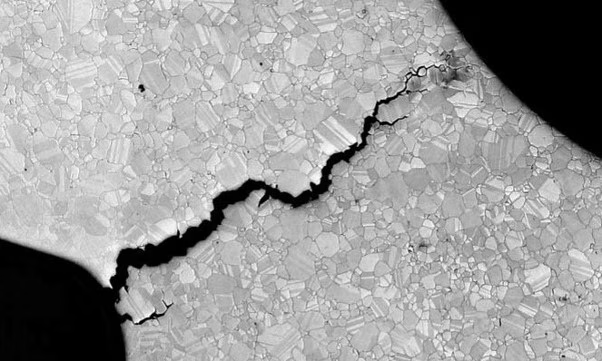
Hydrogen Embrittlement
How to reduce the risk:
- Specify fasteners that have been baked after electroplating to remove absorbed hydrogen.
- Use mechanical plating where appropriate.
- Avoid unnecessary acid treatments during manufacturing.
- Select suitable fastener grades for high-stress applications.
Because hydrogen embrittlement often causes delayed failure, a fastener may appear perfectly sound before breaking without warning.
Galling in Stainless Steel Fasteners
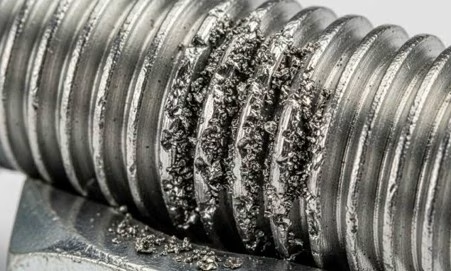
Stainless steel fasteners are widely chosen for their excellent corrosion resistance, but they come with a unique challenge: galling.
Galling occurs when friction between mating threads causes the metal surfaces to seize together. As the threads lock, material transfers from one surface to the other, making further tightening, or removal, extremely difficult. In severe cases, the fastener may need to be cut out entirely.
Ways to prevent galling:
- Apply an appropriate anti-seize lubricant.
- Tighten fasteners at a controlled, moderate speed rather than using high-speed power tools.
- Avoid over-tightening.
- Consider using different stainless steel grades for bolts and nuts where suitable.
Proper installation techniques are often just as important as the fastener itself.
Incorrect Tightening Torque
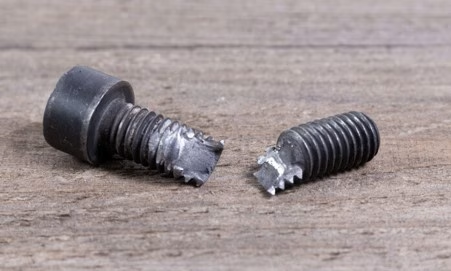
One of the most common causes of fastener failure is also one of the easiest to avoid: applying the wrong tightening torque.
If a fastener is under-tightened, it may loosen under vibration or cyclic loading. If it is over-tightened, excessive stress can permanently deform the fastener, damage threads or even cause immediate failure.
Achieving the correct preload is essential to ensuring that a bolted joint performs as intended.
Best practice includes:
- Following manufacturer torque specifications.
- Using calibrated torque wrenches or controlled tightening equipment.
- Accounting for lubrication, which can significantly affect the relationship between torque and clamping force.
- Training installers in correct tightening procedures.
Remember, the objective is not simply to tighten the bolt as much as possible – it’s to achieve the correct clamping force.
Galvanic Corrosion
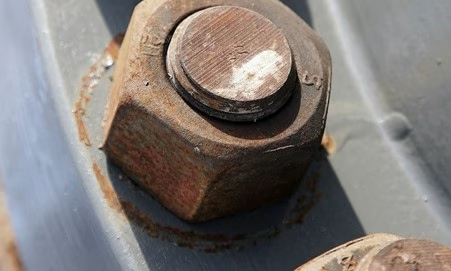
Galvanic corrosion occurs when two dissimilar metals come into electrical contact in the presence of an electrolyte such as moisture or saltwater.
One metal becomes anodic and corrodes at an accelerated rate while the other is protected. This is a common issue in marine environments, coastal construction and outdoor installations where different materials are used together.
For example, pairing stainless steel fasteners with untreated aluminium components can create ideal conditions for galvanic corrosion if appropriate precautions are not taken.
Prevention methods include:
- Selecting compatible materials.
- Using insulating washers or sleeves.
- Applying suitable protective coatings.
- Designing joints to minimise water retention.
- Considering the environmental conditions during material selection.
Choosing the correct material combination from the outset can significantly extend the service life of both the fastener and the assembly.
Thread Stripping
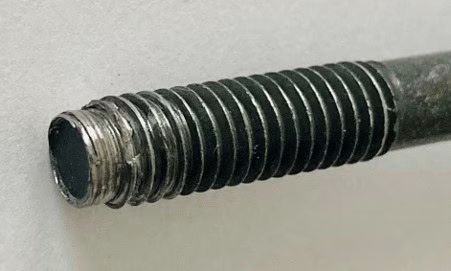
Thread stripping occurs when the internal or external threads become damaged, preventing the fastener from achieving adequate clamping force.
This may result from:
- Over-tightening.
- Poor thread engagement.
- Cross-threading during installation.
- Using incorrect fastener sizes.
- Fastening into soft materials without suitable inserts.
Once threads have been stripped, the joint’s strength is compromised, often requiring costly repairs or replacement components.
To avoid thread stripping:
- Use the correct fastener size and thread pitch.
- Ensure proper thread engagement.
- Avoid forcing components together if resistance is encountered.
- Follow recommended torque values.
- Use threaded inserts when fastening into softer materials such as aluminium.
Careful installation can prevent many thread-related failures.
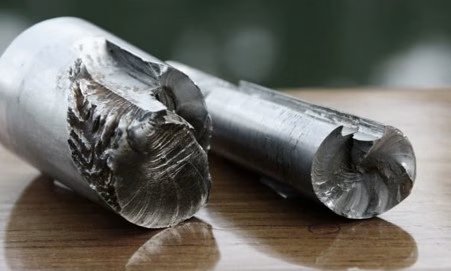
Fatigue Cracking
Unlike sudden overload failures, fatigue cracking develops gradually through repeated cycles of loading and unloading.
Even when loads remain below a fastener’s maximum strength, repeated stress can initiate microscopic cracks that grow over time until catastrophic failure occurs.
Applications subject to vibration or fluctuating loads, including; vehicles, machinery, bridges and wind turbines are particularly vulnerable.
Reducing fatigue failure involves:
- Applying the correct preload.
- Using suitable locking systems where vibration is present.
- Selecting fasteners designed for dynamic loading.
- Inspecting critical joints regularly.
- Replacing fasteners showing signs of wear or corrosion.
Regular maintenance and inspection are key to identifying fatigue before failure occurs.
Prevention Starts with the Right Selection
Many fastener failures are not caused by defective products but by incorrect specification, unsuitable materials or improper installation.
Before selecting a fastener, consider:
- The operating environment.
- Exposure to moisture or corrosive chemicals.
- Expected loads and vibration.
- Temperature fluctuations.
- Material compatibility.
- Maintenance requirements.
Taking these factors into account early in the design or procurement process can prevent expensive failures later.
In Conclusion
Fasteners can be small, but their importance is paramount. A failed bolt, screw or stud can halt production, compromise structural integrity or create significant safety hazards.
Fortunately, many of the most common causes of failure – including hydrogen embrittlement, galling, incorrect torque, galvanic corrosion, thread stripping and fatigue cracking- can be avoided through informed product selection, correct installation and routine inspection.
Investing time in understanding fastener failure doesn’t just improve reliability – it helps reduce downtime, lower maintenance costs and ensure that every joint performs exactly as intended throughout its service life.